Learn
Videos & Presentations
Talks, demonstrations and technical deep dives from the ADAMnetworks team on Zero Trust Connectivity, DNS egress control and incident response.

Session 02 of the ZT DNS Sessions with Microsoft shows how ZTDNS and DTTS make default-deny practical, and why preemptive controls are the answer to AI threats.
How to win against AI threats the world has never seen before. Zero Trust DNS (ZT DNS) re-imagines connectivity at the foundational level, creating a new security control exactly where the Internet needs it most. This is the first of a three-part in depth series.
We can't solve fundamental problems with topical solutions.
Aditi Patange | Microsoft

Human attackers and AI agents can exfiltrate data or circumvent protection due to fundamental weaknesses. This lab test demonstrates the Preemptive Cybersecurity capability of adam:ONE® to patch failures of conventional security systems including circumvention and detection evasion gaps.

A ONE9 featurette on ADAMnetworks and Zero Trust Connectivity: how adam:ONE adds a default deny-all security layer to the IP protocol, protecting IoT, OT and critical infrastructure without endpoint agents.

A technical demonstration of how ZTc ReflexAI dynamic allow-listing works with Don’t Talk To Strangers (DTTS) to achieve complete radio silence against C2 servers without losing operation of OT infrastructure.

At the 2024 Healthcare and Pharma Cybersecurity Virtual Summit, Francois Driessen explains why the conventional security paradigm is failing healthcare and how Zero Trust Connectivity mitigates threats where it falls short.

An ADAMnetworks School of Cyber technical description of Don’t Talk To Strangers (DTTS), which lets a connection through only when it is already established or follows a policy-allowed DNS answer.

David Redekop and Francois Driessen introduce Zero Trust Connectivity: its philosophy, its execution with dynamic AI allow-listing, DTTS and DNSharmony in adam:ONE, and its consequences for attack surface, C2 and data egress.
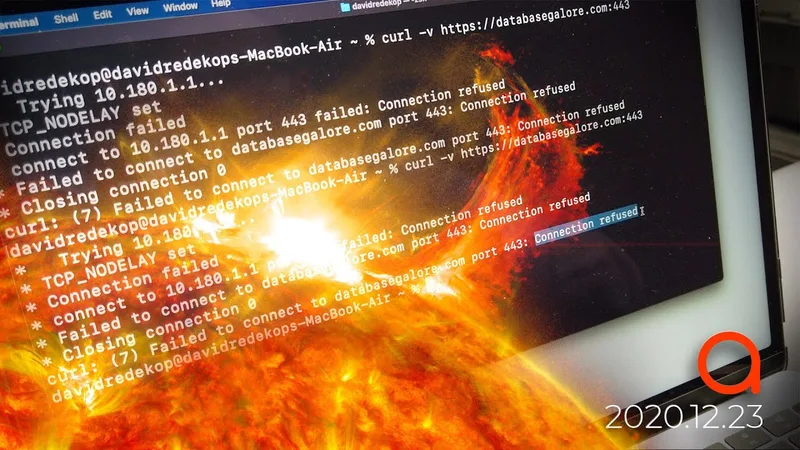
David Redekop explains why a multi-stage attack such as the SolarWinds Orion backdoor cannot reach stage two on a network where adam:ONE refuses connections to destinations that have not been vetted.